(Elliptio lanceolata)
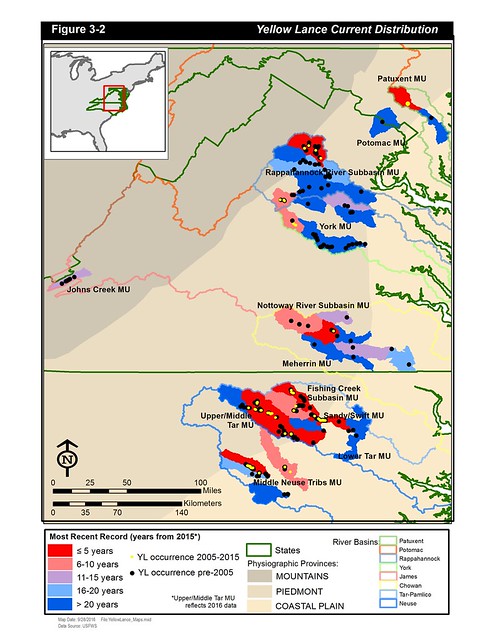
Range map by US Fish and Wildlife Service
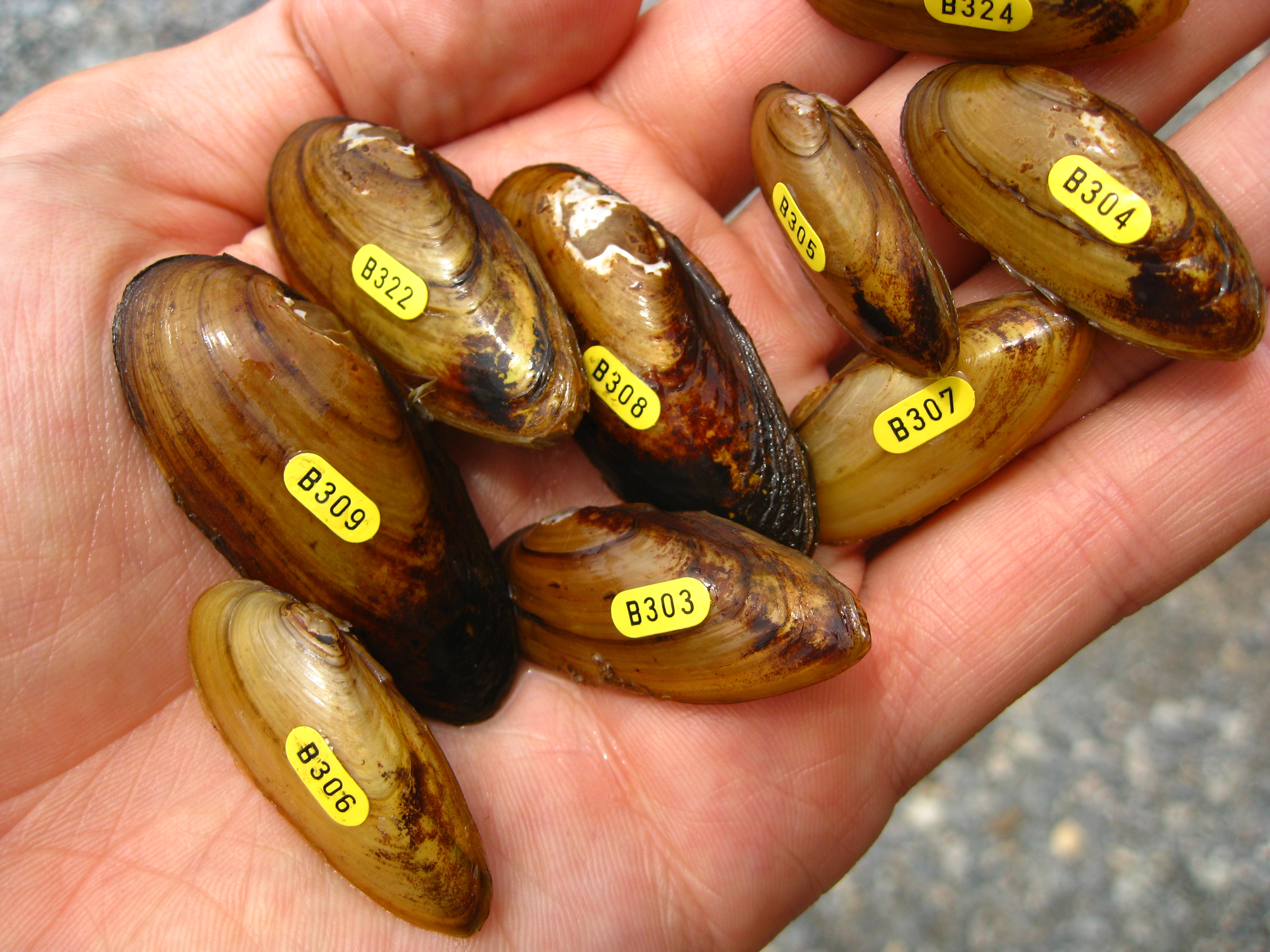
Yellow Lance (Elliptio lanceolata)
The Yellow Lance has an elongate shell with a waxy yellow color. It ranges from the Neuse River Basin in North Carolina north to the Patuxent Basin in Maryland. Unfortunately, they have been extirpated from much of their historical habitat.

Habitat
Yellow Lance prefer clean, coarse sand or very fine gravel with moderate flow. They may be found on certain sand bars or in small pockets of clean, stable sand adjacent to areas of high flow. They are often completely buried and can be found up to a foot below the substrate surface.

Release of Larvae
Larvae are released with small bits of mucus that are near neutrally buoyant and would be attractive for their fish hosts to nibble on.
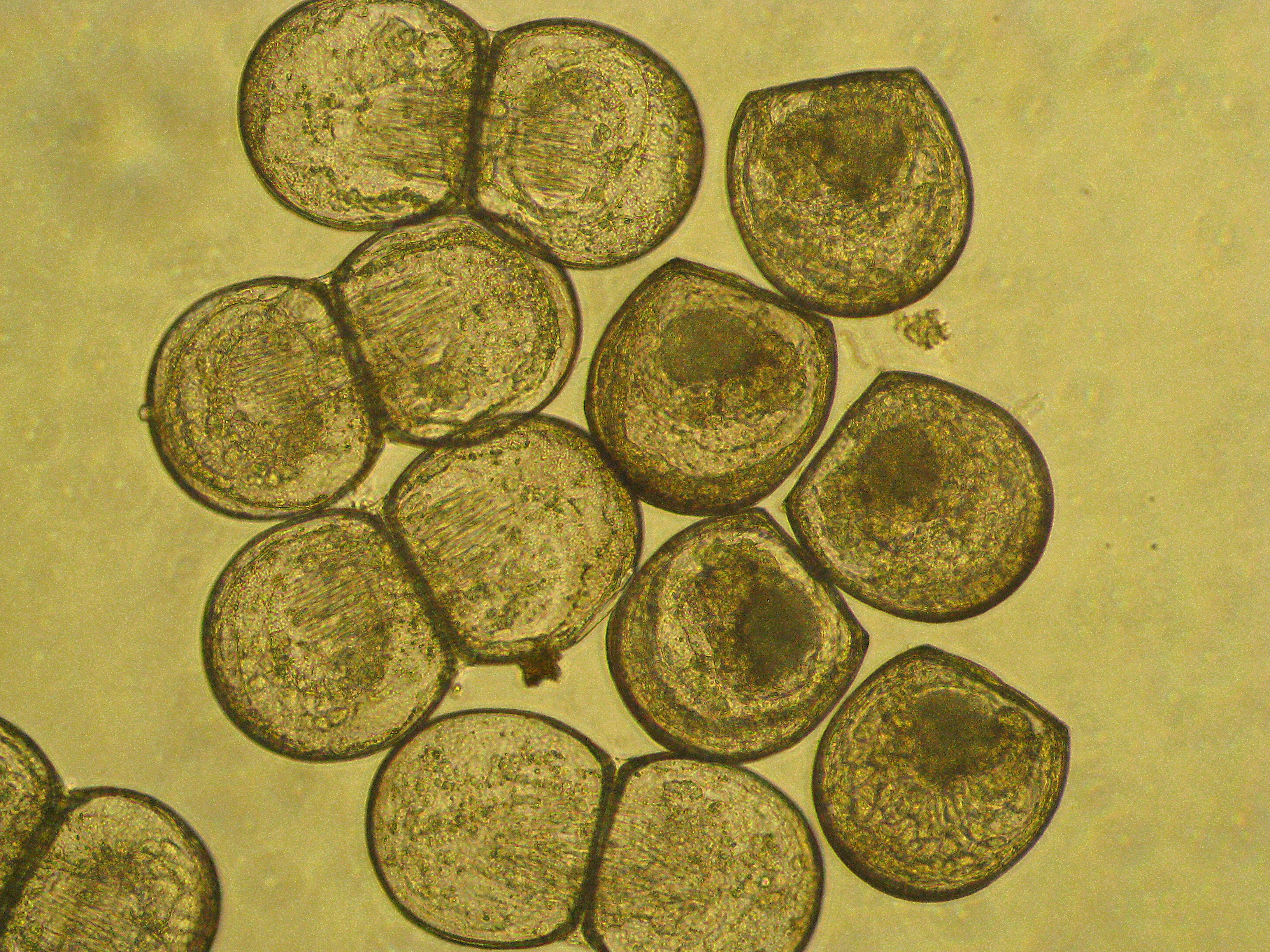
Glochidia
The larvae (called glochidia) are around 170-180 microns in size and are sub-circular in shape. Depending on the size of the mussel, one female might release approximately 5,000-40,000 individual glochidia.
Host Fish
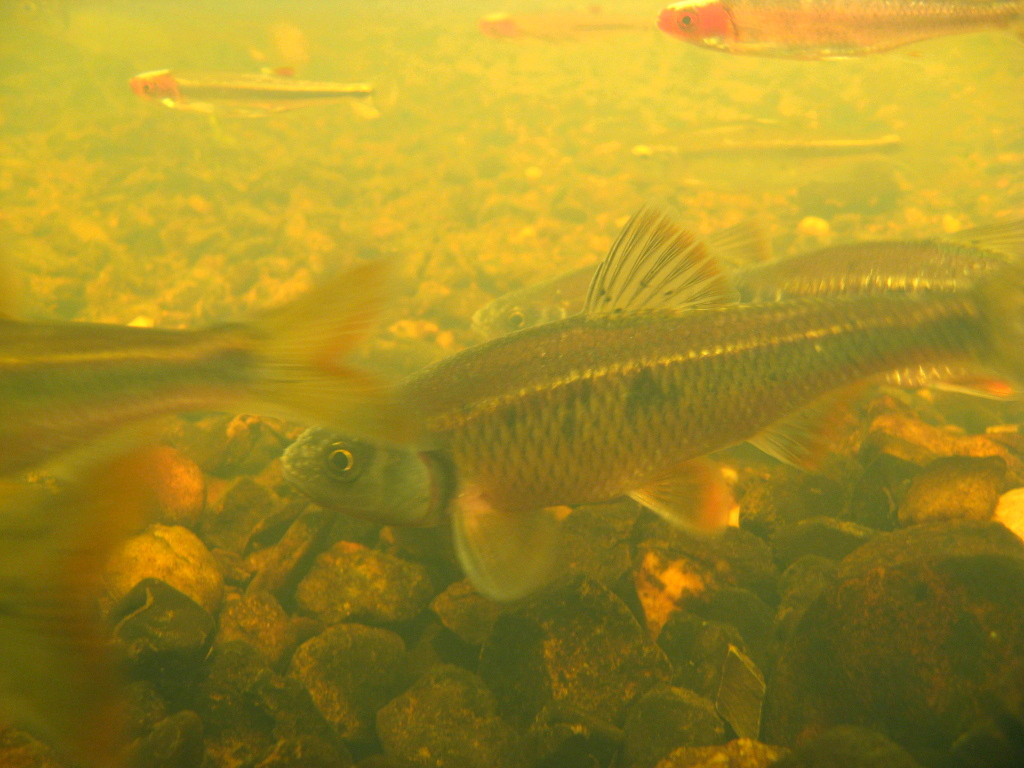
The Yellow Lance uses White Shiners (Luxilus albeolus) and Pinewoods shiners (Lythrurus matutinus) as hosts. Both fish species are dependent on mounds constructed by Bluehead Chubs (Nocomis leptocephalus) or Bull Chubs (N. raneyi) for their spawning grounds. This makes Nocomis chubs very important for the rare Yellow Lance mussel.
Learn more:
Previous restoration work by NCSU and the NC Wildlife Resources Commission:
USFWS information page on the Yellow Lance
 Yates Mill Aquatic Conservation Center at NC State University