
Madi Polera
Lead PhD candidate researcher
I am a freshwater ecologist interested in how genetics, environment, and communities interact to affect wildlife health. My current focus is on ways to determine if a freshwater mussel is healthy and resilient enough to handle stress without harming the mussel. Specifically, I am using the mussel immune system, metabolism, and associated microbes to inform conservation and restoration. Prior to becoming a mussel person I worked in freshwater nutrient cycling, harmful algal bloom dynamics, migratory fish restoration, and PFAS toxicology.

The problem:
While the reasons for mussel declines are often visible or measurable, we also observe mass mortality events and declines that lack the clear explanations. Previously, declines could be attributed to dams, changes in water quality, or other stream degradation. Modern declines are more puzzling. We wonder if disease might be playing a role in addition to things like heat stress, malnutrition, and other toxicants. As filter feeders, mussels are constantly exposed to bacteria and viruses, of which we know there are many in aquatic systems, but we know very little about which may be pathogenic, opportunistic, or even potentially beneficial.
What we’re doing about it:
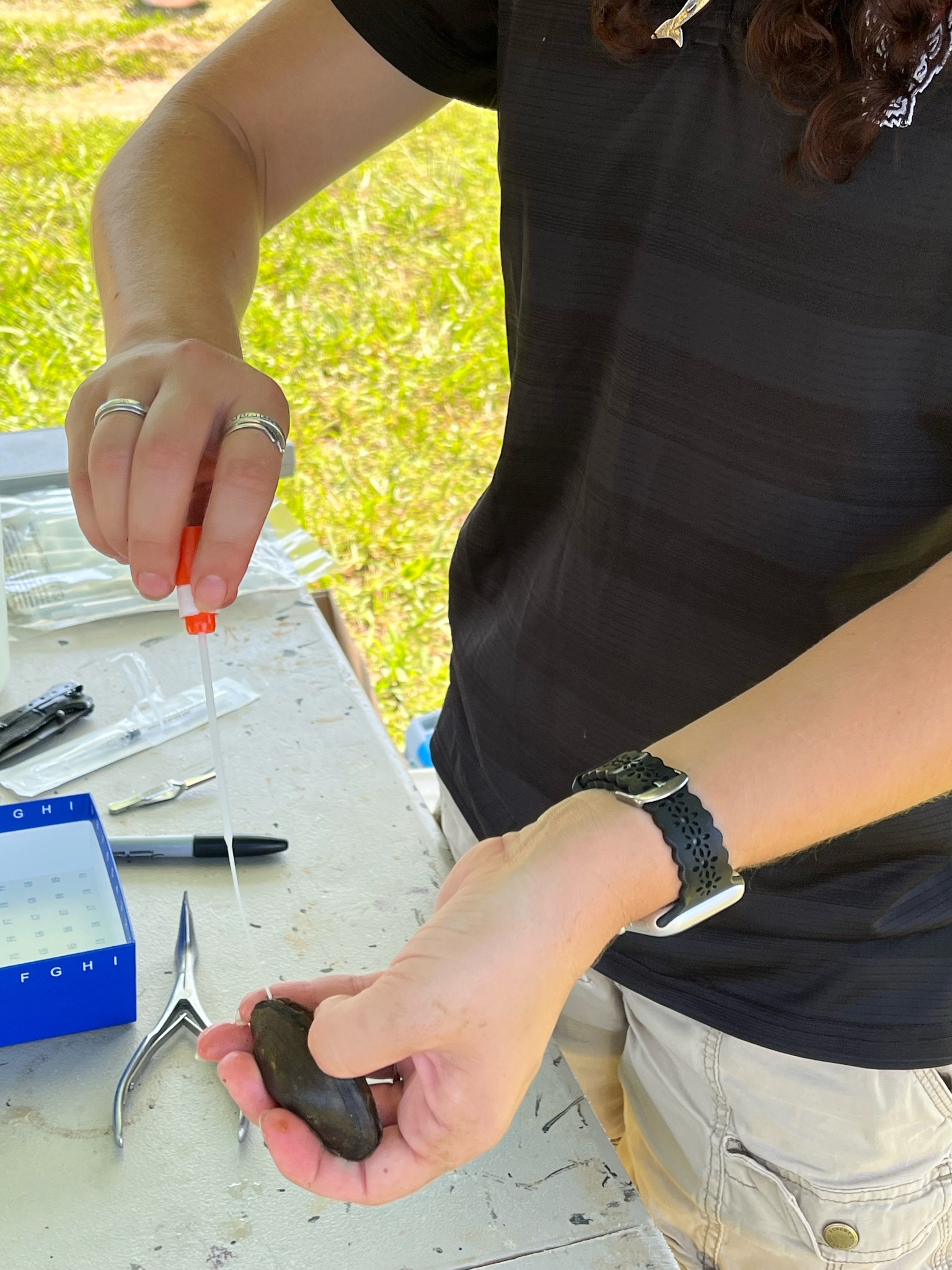
We are working to develop a way to perform a health check-up on adult mussels without harming the mussel; especially those that are threatened or endangered. This suite of health indicators, or biomarkers, could help inform ways that we propagate mussels, where we choose to stock them, which mussels are healthy enough to reproduce, or predict where declines might start.

How we’re doing it:
We’re focusing on the mussel immune system. Mussels have a very limited ability to learn after new exposures; they have no true adaptive immune system. We’re trying to learn how to look at their white blood cells they’re born with and what changes to those cells means for their susceptibility to disease. We’re also looking at their metabolism to find new biomarkers of health and the common bacteria that we find to see which ones are needed for a healthy immune system and which might be stressing the mussels.
Where we’re doing it:
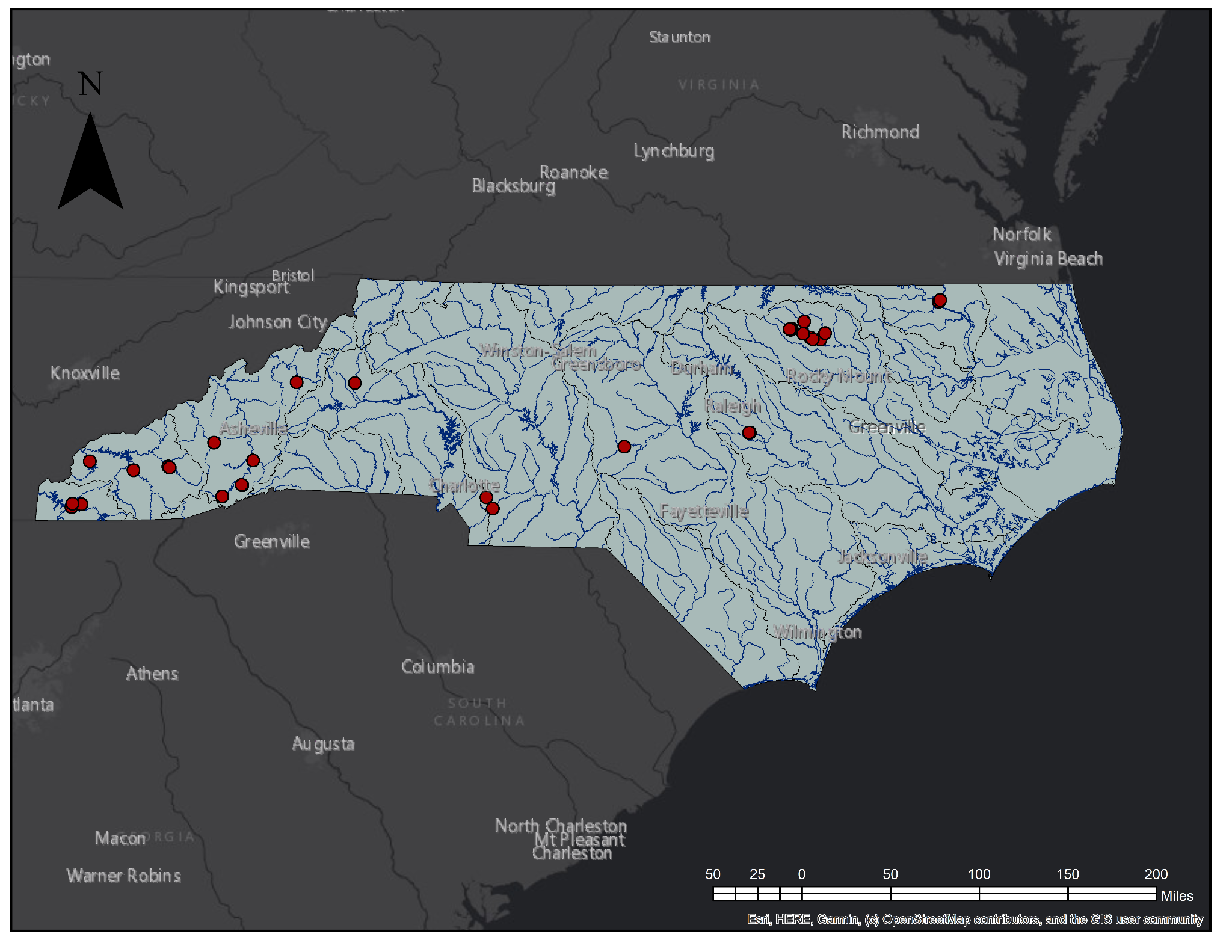
Our focus is on four threatened or endangered species: the Tar Spinymussel, the Atlantic Pigtoe, the Yellow Lance, and the Dwarfwedge mussel. We are interested in those in the Tar and Neuse River basins that might be impacted by the I-540 bypass currently under construction around Raleigh. However, we’re also sampling mussels across the state of North Carolina to understand how geography, water quality, and taxonomy changes the associated bacteria. This might help us find species that can serve as surrogates for the mussels that are hard to find or might be more sensitive to health check-ups. Currently, most species in North Carolina at over 50 sites have been sampled.
Who’s involved:
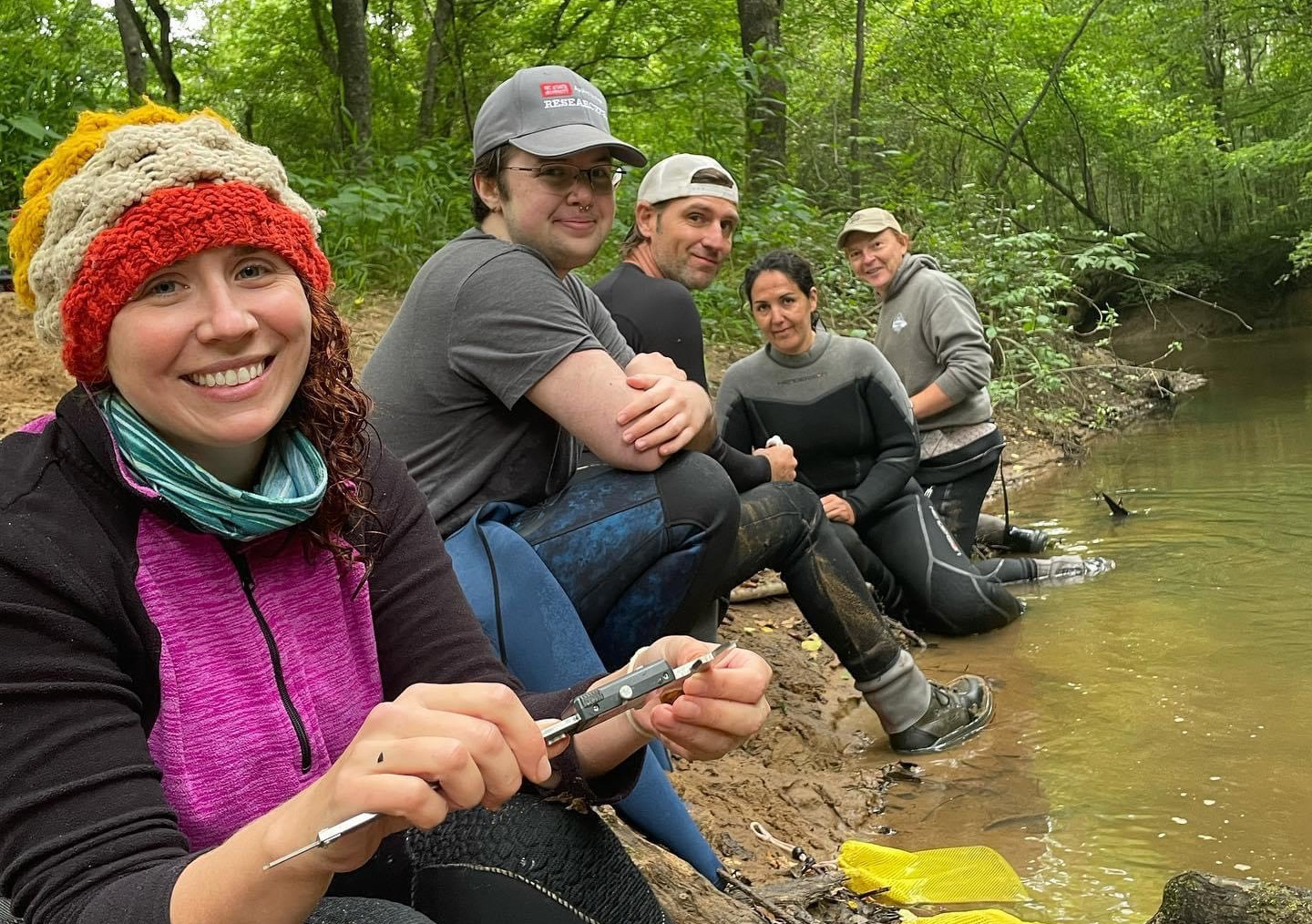
This research is funded by the North Carolina Department of Transportation. We’re grateful to biologists from the N.C. Wildlife Resources Commission and the U.S. Fish and Wildlife Service for their help and expertise throughout the project from their advice to boots-on-the-ground sampling. Work has also been conducted at the NCWRC Conservation Aquaculture Center, the Virginia Department of Wildlife Resources Aquatic Wildlife Conservation Center, the U.S. Fish and Wildlife Services Harrison Lake National Fish Hatchery, and the N.C. Museum of Natural Sciences.
 Yates Mill Aquatic Conservation Center at NC State University